
New


Original price was: $27.95.$19.57Current price is: $19.57.
- Safe Payments, the Smart Choice
- Shop with Confidence, Pay Safely
- Protecting Your Payment Information
- Quality products, fair prices.

This product contains R134a refrigerant. This product is meant for use only in motor vehicle AC systems. This product is less than 2 pounds. This product is in a container with a self-sealing valve.
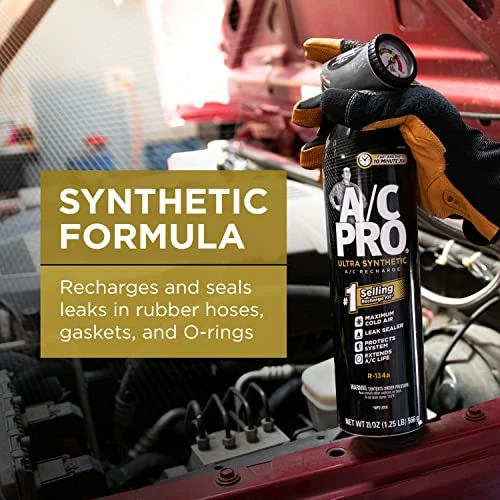
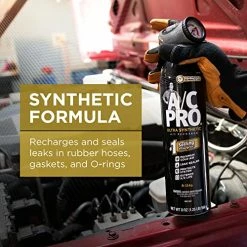
- Replaces lost R-134a refrigerant and oil in automotive A/C system to protect and extend system life
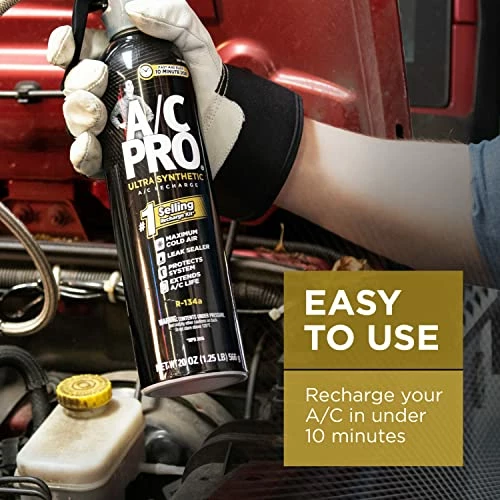
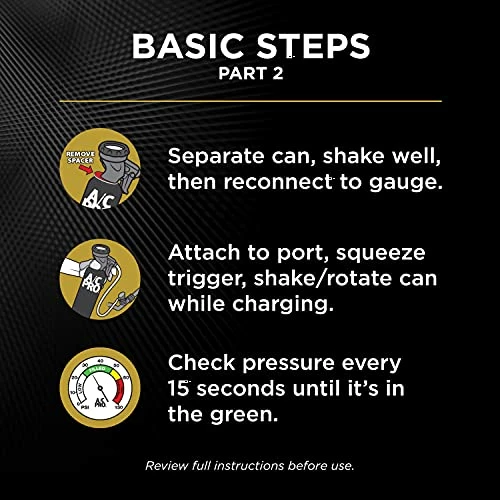
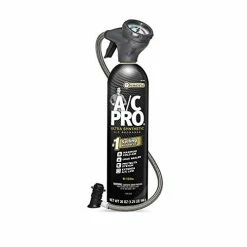
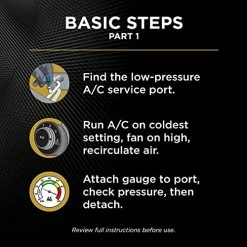
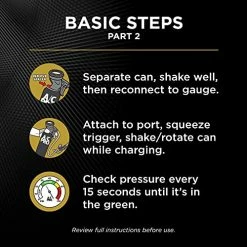
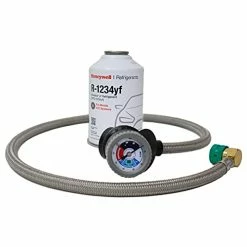
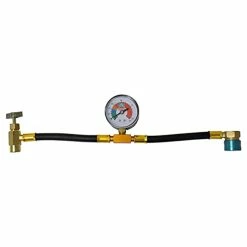
- Comes with reusable extra-long braided charging hose and large gauge with trigger dispenser for easy, convenient, and accurate recharging
- Formula with 2X cooling boosters vs the next leading brand of A/C recharge kits: independently tested to deliver the coldest air from your vehicle’s A/C
- Contains R-134a gas which is acceptable for use in motor vehicle A/C (MVAC) systems
- Complies with Section 612 of the EPA Clean Air Act, EPA Compliant in Self Sealing Cans
6 reviews for Coupon ???? A/C Pro Ultra Synthetic A/C Recharge R-134a Kit (20 Ounces) ✨
Add a review
Related products
New
Refrigerants
Original price was: $37.63.$26.34Current price is: $26.34.
New
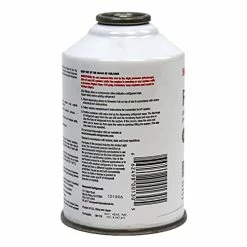
Refrigerants
Original price was: $79.99.$55.99Current price is: $55.99.
New
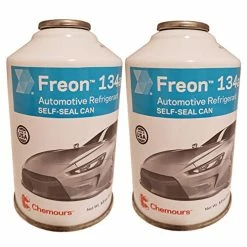
Refrigerants
Discount ⌛ Chemours Brand R134a For MVAC Use In A 12-Ounce Self-Sealing Container (2) ✨
Original price was: $39.99.$27.99Current price is: $27.99.
New
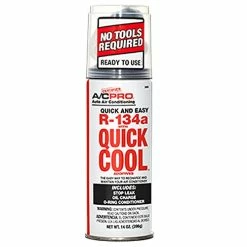
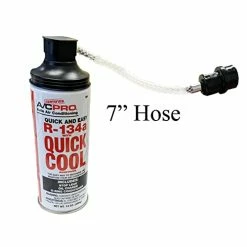
Refrigerants
Brand new ???? ZeroR R134A Refrigerant For MVAC- In 14oz Self Sealing Can – All In One Kit ????
Original price was: $17.95.$12.57Current price is: $12.57.
New
Refrigerants
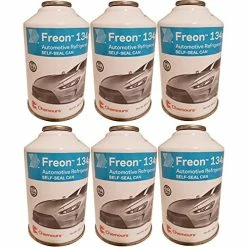
Deals ???? Chemours Brand R134a For MVAC Use In A 12-Ounce Self-Sealing Container (6) ????
Original price was: $78.99.$55.29Current price is: $55.29.
New
Original price was: $15.44.$10.81Current price is: $10.81.
New
Original price was: $14.99.$10.49Current price is: $10.49.
New
Refrigerants
Original price was: $99.99.$83.00Current price is: $83.00.
Aaron Blood –
The product works as advertised. This was my first time attempting to recharge the A/C myself and if you haven’t done this before I would highly recommend you do a search on your specific vehicle to correctly identify the LOW PRESSURE AC valve. In my case, my 2004 Dodge Ram and 2006 Expedition have high pressure AC valves easily visible as I open the hood. Thankfully the connector is different else I very well could’ve hooked this unit up to it by mistake. I had to go online to learn the correct low pressure valve that you hook this unit up to (very easy BTW) is located near the firewall where the AC hoses are returning to the passenger compartment. The hose attachment and pressure gauge are easy to use and seem to be of a pretty decent and reusable quality. I think I’ve seen the recharge cans available without the gauge for the next time I might need it. I have to take off 1 star because it appears the can seal is permanently punctured when the hose/gauge is screwed into it. So now, I can’t really discard the unused portion of the can in good conscience without releasing refrigerant into the environment. So, I will have to wait til the next time I need it, use it up, and then go onto the next refill can. I screwed the thing down tight, but I can’t help but think refrigerant will leak out if stored in my garage for a year or two? Would really have preferred they use a valve on the can and I’m actually a little surprised the EPA would even let it go to market like this.
spongee –
OK, just like many of you I was really hesitant to buying this and wondering if it was going to work or not. But hey, if you are like me you want to start with the least expensive solution before having to spend lots of money on something in case it’s really not that bad.My AC PRO arrived 2 days after I had placed my order, it was nicely packaged and I couldn’t wait to get the refrigerant refill in my vehicle as we were going through some really bad heat ways in California those days and my AC wasn’t working on my 2007 Dodge Nitro R/T. I read the instructions, watched plenty of “HOW TO” videos on you tube and even what to do encase I overfilled it and like many videos on you tube some were good some were just terrible. To stay on point, I decided to follow the same directions of one of my favorite videos I had watched where the person was indicating to do little squeezes at a time like 15 to 20 seconds at a time as you are gently moving the bottle around. When I plugged the adapter thing to the indicated are of my car and read the indicator display it was at zero. So I did the first shoot for 15 seconds and the needle barely moved on the display, so then I took another shot at it for another 15 seconds but not enough yet ether, or at least not to where it needs to be. I went for another shot of 15 seconds and the needle had moved a bit more but not where it was necessary just yet, I went to check inside the car to see if there was any cold air coming out and I started to feel some cool air coming from the vents. I sat there for about a few minutes to see if the air got any colder as it was cool but not cold. I went back to the front and plugged everything back again and holy Jesus to my surprise the needle now shot passed the recommended area. I got scared and almost panicked, but I remember watching some videos where they had over added refrigerant and the vehicles started making some weird noises, luckily that wasn’t the case for me but never the less I freaked out. I unplugged everything and decided to take it for a drive as I had seen some comments where people were saying to drive the vehicle for a few miles after refill so it can make it’s way through. After a while the air did start to come out a little bit colder then it was where I knew my passengers and my self would be ok. The next day I checked the needle gauge again and it was still a little bit passed the overflow section but not too bad and at least my vehicle wasn’t making any funny noises. I got this back in early Jun and as of now (August) still works good. The air is cold enough when it’s set to the highest setting, enough to where it will set a nice comfortable temperature inside compared to the outside on those hot days, but I don’t feel it as cold as it could get when you first purchase a vehicle. On low setting the temperature still comes out cold but works best at it’s highest setting. Never the less it’s way better than not working at all.I do recommend this product, but my piece of advice is to do little bit’s at a time and give it some time in between shots/squeezes and not one fight after the other like I did as the gauge takes a while for it to give you a good reading and maybe do shots of 10 seconds rather than 15 seconds so you don’t freak out encase you over shoot it like I did, but not enough to worry. Also DO NOT REMOVE THE HOSE from the can after you are done and want to store the little bit you got left, LEAVE THE HOSE attached to the can. I thought since I have some left over I will remove the hose and put the cap back on, NOPE!! bad idea it all starts to escape and the only way to stop it is to connect the hose back to the can. The little bit that’s left, maybe a quarter of a can or slightly less I have stored in a cool area in my garage for a small shot if it’s needed in the future, but so far so good. I know this review is long but I wanted to share my mistakes so you don’t make them and save you the trouble. So overall I do recommend this product, it does work as described and it saves money, just be cautious of it as there is some stuff that are not mentioned clearly when purchasing this product and there for I wanted to share them with you, hope this helps and good luck.
Hypersonixz –
As someone that doesn’t do much car stuff, rarely ever even opening the hood, I read a lot of the reviews, and many seemed to indicate various issues. And since everywhere else in California wants me to pay a deposit (and generally charges more), I decided to order from Amazon since there’s no deposit so I don’t have to return the can, so I can use it again later if I end up needing it.So I read the instructions, and they were very clear step by step on what to do. My hose/gauge did not leak anything in the process, and seemed very well built (not that I have anything to compare it to in terms of car stuff, but I did use other hose systems for air compressors and whatnot). I put on Nitrile gloves no refrigerant leaked or sprayed onto them. The gauge seals onto the can with no leakage, and the hose end sort of pops into place on the car end without leaking anything either. I’d still suggest wearing gloves anyways, and if I were filling the car again next time I’ll be wearing gloves.As for the accuracy of the gauge, I have nothing to compare it to, so I don’t know if it’s necessarily accurate. However, I do know that every time I’d squeeze the trigger for like 10 seconds then let go the meter will go up a little bit. So it’s definitely tracking the pressure. The green zone is pretty big, so even if the pressure is off it’s still very easy to get it safely in the green zone.As for the cooling, it helped. It’s not ice cold, but it is noticeable better than before without the need of a thermometer or anything to measure. The meter was pretty high up in the white zone when it started, and I just filled it to about half way into the green.
Hien Le –
I like the new design of self-sealing the can for the unused portion of freon. The very informative pressure indicator is useful against overcharging the system with this 20-oz can. The instructions were a little bit confusing. Steps 5 and 6 should be done first before Steps 1 through 4 and then the last Step 7. Highly recommended for any without knowing much about how the AC system work. I also happen to use my iGrill 2 to monitor temperature of the air at the register. On this day with outside air temperature in the high 80F, I got it down to 48F after using all of the 20-oz can.
Debi P. –
Did the job
Generic –
Awesome product. But the quality has gone down. It used to tell you how pressurized your system was. Now they’ve dumbed it down to colored regions that don’t mean anything